How to Open Your Own Salon: Home Studio to Storefront
Learn how to open your own salon and transition from a home studio to a profitable storefront with realistic costs, timelines, and expert operational tips.
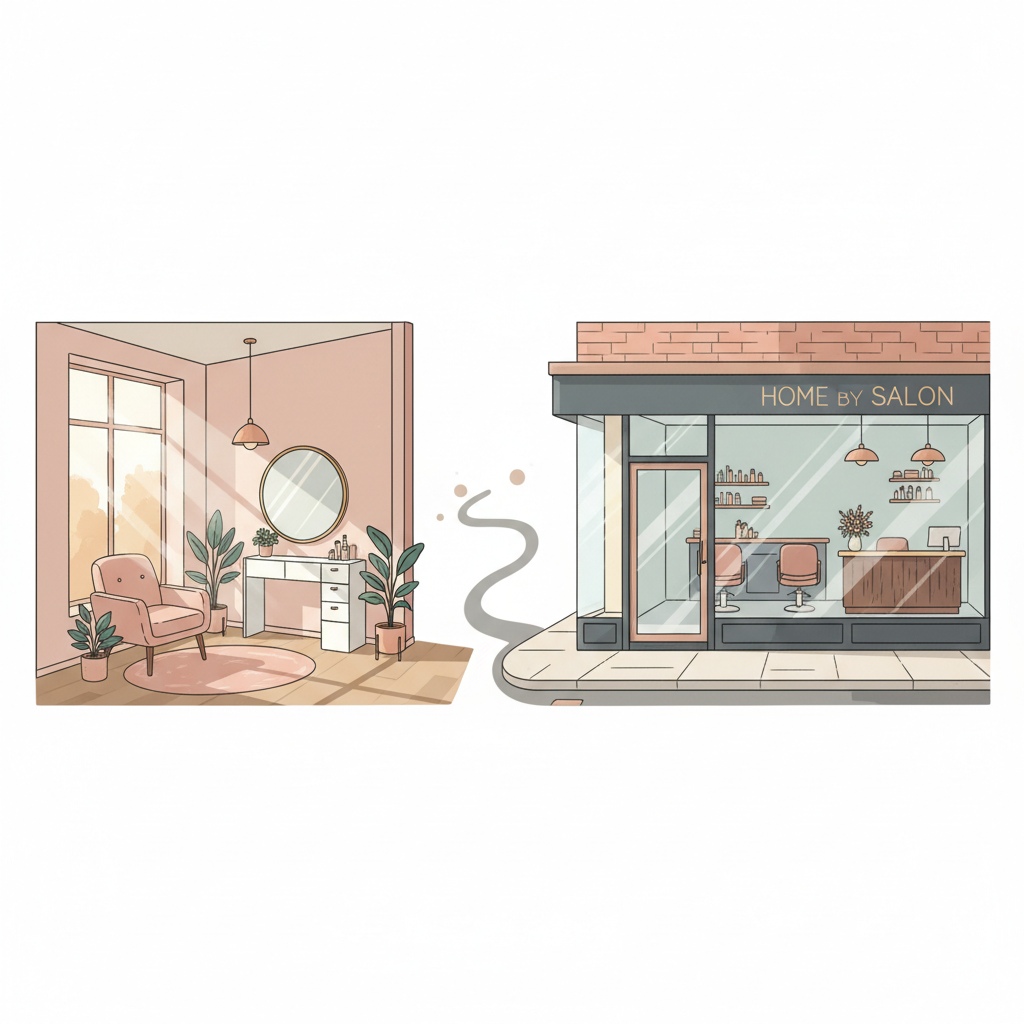
Knowing how to open your own salon requires a clear strategic shift from casual solopreneur to commercial operator. Moving from a private home setup to a brick-and-mortar location typically takes between 4 to 9 months and requires an initial investment ranging from $15,000 to $75,000, depending on build-out needs. This practical roadmap breaks down the financial thresholds, lease negotiations, and systems you need to expand your beauty brand with confidence.
Assessing Readiness: When to Leave Your Home Studio
Leaving the low overhead of a residential studio is a high-stakes move. You should only transition when your current environment actively caps your revenue growth.
Client Retention and Revenue Benchmarks
Before signing a commercial lease, review your numbers over the past six months. You should maintain an 80% or higher client retention rate and have your calendar consistently booked at least 3 to 4 weeks in advance. Aim for a stable monthly revenue of $6,000 to $10,000 as a solo provider before absorbing the recurring overhead of commercial rent, utilities, and commercial insurance.
Space and Privacy Limitations
A home studio eventually hits a ceiling. Parking complaints from neighbors, local zoning restrictions on residential client traffic, and the inability to hire assistants or rent chairs are standard indicators that your business has outgrown your home.
How Much Does It Cost to Open a Salon Storefront?
Commercial expenses extend far beyond monthly rent. Calculating your true capitalization protects you from cash-flow shortages during your first quarter of operations.
To budget accurately for your commercial space, plan for these core startup expenses:
- Lease deposit and advance rent: First month, last month, and security deposit ($4,000 – $12,000).
- Plumbing and electrical build-out: Commercial shampoo bowl lines, ventilation, and dedicated 20-amp circuits ($6,000 – $25,000).
- Styling stations and furniture: Ergonomic hydraulic chairs, mirrors, reception desks, and waiting area seating ($3,500 – $10,000).
- Opening inventory and backbar: Professional color lines, styling products, and retail displays ($2,500 – $6,000).
- Licensing, permits, and legal fees: LLC registration, occupancy permits, and insurance policies ($1,200 – $3,000).
- Operating cash reserve: Minimum 90 days of fixed overhead expenses to cover your ramp-up period ($9,000 – $18,000).
Explore our industry growth guides to model service pricing that absorbs these overhead increases without eroding your profit margins.
Step-by-Step Transition Plan for Starting a Salon Business
Opening a hair salon or personal care studio requires strict project management across real estate, legal compliance, and customer marketing.
Securing the Right Commercial Real Estate
Look for spaces zoned for personal care services that already have wet plumbing installed, such as previous salons, spas, or dental clinics. Modifying concrete slabs to run new drain pipes can easily add $10,000 to contractor estimates. Negotiate a "tenant improvement allowance" (TI allowance) or 1 to 2 months of abated (free) rent during the renovation phase.
Modernizing Your Front-of-House Systems
Switching to a storefront requires professional workflow management. Ditching manual text confirmations in favor of dedicated software like Boeked ensures you capture non-refundable deposits, eliminate no-shows through automated reminders, and maintain clean digital client color formulas across every station.
Migrating Your Existing Clientele
Begin preparing your regulars 60 to 90 days before launch. Emphasize improved amenities like dedicated parking, premium beverage stations, and expanded appointment availability. Offer your existing roster an exclusive pre-booking window for your opening month to ensure immediate cash flow on day one.
What Licenses and Permits Are Needed to Open a Salon?
Operating legally prevents sudden closure notices and fines from local regulatory bodies. First, you need an establishment license from your state’s Board of Cosmetology or Barbering. This requires an in-person health and sanitation inspection covering ventilation, hot water capacity, and disinfected tool storage.
Second, obtain a Certificate of Occupancy (CO) from your municipal building department to prove the building adheres to building codes and fire safety regulations. Finally, secure a General Liability policy paired with Professional Liability coverage to safeguard your company against slip-and-fall claims or chemical service disputes.
Frequently Asked Questions
How long does it take to open a commercial salon?
The entire process typically takes 4 to 9 months. Site selection and lease negotiations usually consume 6 to 10 weeks, permit processing takes 4 to 8 weeks, and build-outs require another 6 to 12 weeks depending on plumbing and contractor schedules.
Should I use a booth rental or commission model?
Booth rental provides guaranteed weekly income to cover your base lease, transferring product overhead to independent contractors. A commission or hourly model gives you higher quality control over the customer experience and greater revenue upside as your brand scales.
How much square footage do I need per styling station?
Plan for roughly 125 to 150 square feet per styling station. A 1,000-square-foot commercial unit comfortably accommodates 4 to 5 stations, two shampoo bowls, a compact dispensary, a reception desk, and a client waiting area.
Moving your beauty business out of your house is the ultimate step toward building long-term equity. Take control of your appointment pipeline, client cards, and payment processing from day one when you start your free trial with Boeked.